A salon layout is more than a row of chairs. Reception, consultation, styling, washing, product display, cleaning, and staff support all ask something different of the space. The brief should explain how those activities connect.
Use this checklist to prepare decisions for your designer. Confirm equipment requirements and site-specific technical, accessibility, and approval questions with the relevant professionals. A reference image is useful for discussing atmosphere, but it does not establish working dimensions or a compliant layout.
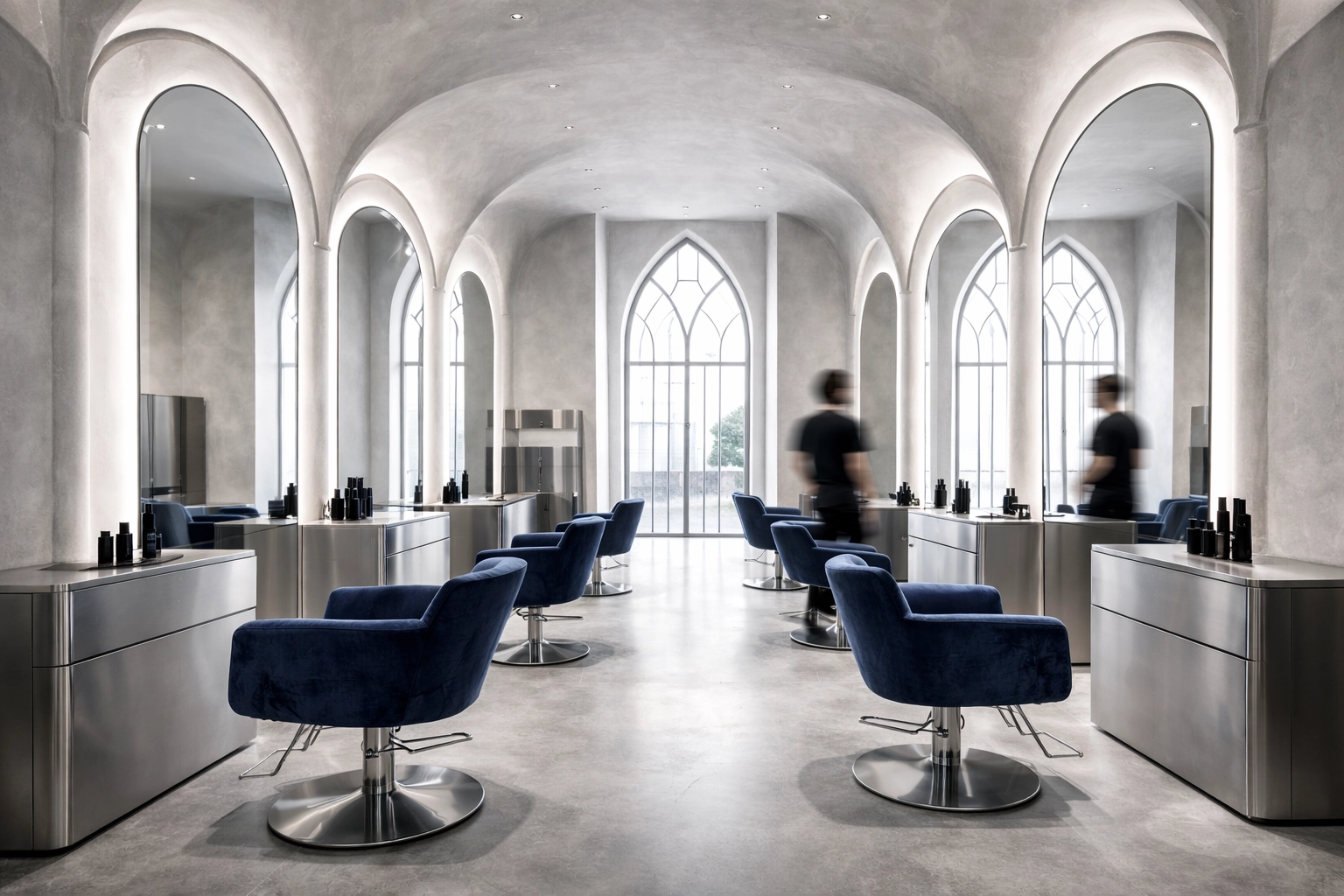
Illustrative reference / Not client work
"A BOLD SALON SHOULD WORK AS WELL AS IT LOOKS."
Make arrival feel obvious
Stand at the entrance and describe what a new client sees first. Can they identify where to check in? Does waiting compete with the route to a station? Where can a coat or bag go? Include the moment before an appointment as part of the design, rather than fitting a waiting seat into leftover space.
Decide how retail products support the visit. A considered display near consultation or checkout may be useful, but its position should not force every client and staff member through the same pinch point. Sketch the customer route before choosing display furniture.
Brief the station around the service
List the services delivered at each station, who uses it, the equipment involved, and what needs to be within reach. Bring manufacturer dimensions for chairs, mirrors, trolleys, and fixed equipment. Discuss operating space and routes using real equipment information rather than estimating from an image.
Record where tools, products, client belongings, and cables go during the appointment. Consider how a seated client, a stylist, and a passing colleague share the area. Let the designer know about different service durations and any need for privacy or a quieter consultation.
Connect washing and staff support
Map the journey between styling, washing, preparation, and clean storage. List the wash units and their manufacturer requirements, then have the relevant contractor review the existing services and proposed locations. Moving a wet area is a coordination decision, not just a change to the furniture plan.
Include towel handling, product preparation, cleaning, waste, deliveries, and staff belongings in your brief. Ask the team which repeated trips take the most effort today. That information can make a layout discussion more useful than simply asking for more stations.
- Clean and used items have identified holding places
- Products and tools have storage close to their point of use
- Delivery and restocking routes are considered
- Staff can explain the opening and closing routine on the plan
Review light and materials in context
Separate the atmosphere you want clients to feel from the light staff need to work. Discuss mirror reflections, daylight changes, task lighting, and the appearance of hair and finishes with your designer and lighting supplier. Review samples in the actual space where possible.
For floors, worktops, seating, and cabinetry, bring the expected cleaning routine and product exposure to the supplier conversation. Ask for the relevant maintenance and suitability information before selecting a finish solely for its colour or texture. Record alternatives if availability changes.
Walk through a full appointment
Review a busy appointment period on the plan with your team: one client arriving, another being washed, a stylist collecting supplies, and someone paying. Mark each pause or crossing that seems awkward. Include clients with different mobility and access needs in the design discussion, with the appropriate professional review.
Choose three priorities for the first design conversation, such as clearer arrival, more useful storage, or a stronger signature moment. Share photos, the existing plan, equipment information, and those priorities. That is a concrete starting point for a layout brief or a broader interior concept.
The illustrated salon is a visual reference, not completed JQ33 client work or a dimensioned layout. Your plan should be developed around your premises, equipment, services, and agreed professional scope.
Give your salon a clear direction
Tell us about your services, existing space, and the daily routines you want to improve.